
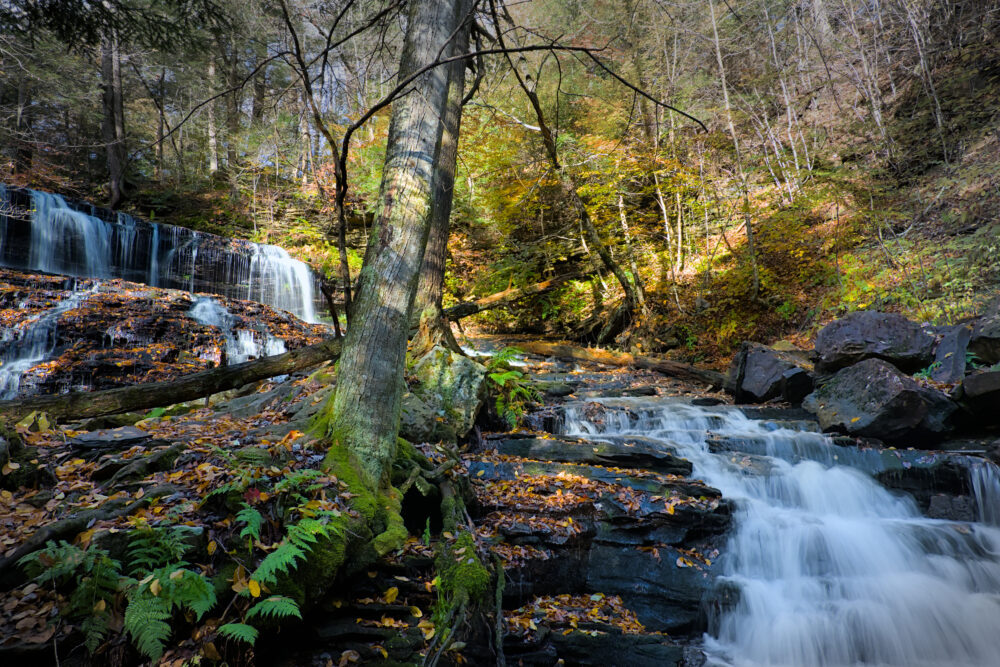
Forests call to us. Maybe it’s their peacefulness or the awesome size of the trees. Capturing that feeling in a photo can be tough. This guide breaks down the gear, skills, and editing steps needed. Learn how to photograph trees and forests.
Location, Location, Location
Find a good location near to you for practice. The more you can visit, the better you will become. Plus you will discover how your images become ever changing on visit after visit. Looks for State Parks or National Parks near you or close by on your travels.
Gear Up for Greatness: Essential Photography Equipment for Forests
The right gear makes a big difference. It allows you to handle tricky lighting and get sharp images. Here’s what you need.
The Right Camera Body: Sensor Size and Features
Sensor size matters. Dynamic range helps capture detail in bright and dark areas. Image stabilization reduces blur. Weather sealing protects your camera from rain. Look for these features when choosing a camera.
Lens Selection: From Wide-Angle to Telephoto
Lenses are key. Wide-angle lenses (10-24mm) capture vast landscapes. Mid-range zooms (24-70mm) are versatile. Telephoto lenses (70-200mm or longer) isolate subjects.
Aperture controls depth of field. A wide aperture (f/2.8) creates a shallow depth of field. This blurs the background. A narrow aperture (f/8) keeps everything sharp. Sharpness is vital. Invest in quality lenses.

Tripods and Stabilization: Achieving Sharp Images
Tripods are a must to keep your camera steady in low light. This lets you use slower shutter speeds. Carbon fiber tripods are light but sturdy. Aluminum tripods are cheaper but heavier.
Monopods offer some stabilization. They’re easier to carry than tripods. Image stabilization in your camera body or lens also helps.
Mastering Light and Composition in the Woods
Forest light is unique. Give yourself plenty of time to wander around and watch how the light changes by the minute.
Understanding Forest Light: Dealing with Shadows and Highlights
Dappled light creates interesting patterns. Golden hour (early morning and late afternoon) offers warm light. Overcast days provide soft, even light.
A light meter helps you expose images correctly. A histogram shows the tonal range. HDR (High Dynamic Range) combines multiple exposures. This captures detail in both shadows and highlights. Exposure blending does the same thing manually.
Composition Techniques: Leading Lines, Framing, and Perspective
Leading lines guide the eye. A path or stream can serve as a leading line. Framing uses elements to surround your subject. Trees can frame a distant mountain.
The rule of thirds divides the frame into nine equal parts. Place key elements along these lines. Symmetry and asymmetry create balance. Use these ideas to make interesting compositions.
Finding Unique Perspectives: Getting Low, Going High, and Thinking Abstractly
Experiment with viewpoints. Get low to the ground. Show the forest floor. Climb to higher spots. Get a wide view.
Focus on abstract details. Patterns in bark are examples. Light filtering through leaves makes a great image. Look for new ways to see the forest.
Techniques for Stunning Tree and Forest Photos
Specific techniques elevate your photos. Try these to make a real impact.
Capturing Movement: Long Exposures and Waterfalls
Long exposures blur movement. This works great for water. You’ll need a tripod and likely an ND filter which reduces the amount of light entering the camera, hence increasing the shutter open time.
Set a slow shutter speed. Water will appear smooth. Branches will sway softly. Capture the feeling of motion.

Isolating Subjects: Using Depth of Field and Telephoto Lenses
Shallow depth of field isolates subjects. Use a wide aperture. Blur the background. Make your subject stand out.
Telephoto lenses compress perspective. This creates dramatic compositions. Take portraits of trees using these methods.
Macro Photography: Exploring the Intricate Details of Nature
Macro photography reveals small wonders as you photograph trees and forests. A macro lens is a must. Extension tubes are cheaper alternatives. They shorten the lens’ minimum focusing distance. Photograph leaves, bark, and fungi close-up. Capture the initmate details of nature.
Post-Processing: Enhancing Your Forest Images
Post-processing refines your photos. Aim for natural enhancements. Subtle adjustments make a big difference. Perfect your techniques to build a repeatable workflow.
Basic Adjustments: Exposure, Contrast, and White Balance
Adjust exposure to brighten or darken the image or selective areas to guide the viewer’s eye. Increase contrast to make details pop. Correct white balance for accurate colours.
Adjust highlights and shadows to recover detail in bright and dark areas. Keep the image looking natural. Avoid over-processing.
Colour Correction and Grading: Creating Mood and Atmosphere
Adjust colours to create a mood. Colour grading changes the overall colour palette. Selective colour adjustments target specific colours. HSL adjustments control hue, saturation, and luminance.
Create a warm, inviting feel. Make the forest mysterious and cool. Experiment with different looks.
Sharpening and Noise Reduction: Optimizing Image Quality
Sharpen your images to bring out detail. Use sharpening tools carefully. Avoid over-sharpening.
Reduce noise to improve clarity. Noise reduction algorithms smooth out images. Balance sharpness and noise reduction. Again, don’t overdo it as this will result in your photos looking unnatural.
Conclusion
Taking great forest photos requires the right tools, skills, and artistry. Understand your camera. Master light and composition. Explore post-processing. Now, go out and photograph trees and forests. Capture their beauty?
A Selection Of Guide Articles
Guide: How To Photograph Trees And Forests
Trees and forests capture unique light and combined with their random shapes they make for excellent photographic subjects
Why Good Weather Is Bad
The paradox of why good weather is bad and bad weather is good when it comes to getting better results with your landscape photography
Inspiration for Landscape Photography
Find your inspiration for landscape photography in many forms, from peaceful relaxation in nature to visiting galleries or hunting online
Long Exposure Photography
Long exposure photography tips and tricks, understanding filters and the role light plays in choosing the right camera settings
Using Reflections In Landscape Photography
We look at how to best use reflections in landscape photography as the method to add symmetry to you compositions
Adapting A Vehicle For Landscape Photography
We talk about the thought process and steps we took to make life easier when adapting a vehicle for landscape photography
RAW Format Photography
Understanding Camera RAW format files and why they are best for photographers wanting optimal image quality and processing flexibility
Mastering Exposure
Mastering exposure requires understanding of the three principal mechanisms: shutter speed, aperture size, and the photographic material's level of sensitivity to light (ISO)